Sounding Off with S-Ray

Controller with TrayDuring the last several years, two of the more popular topics on this site have been the company S-Ray and digital dentistry. I am routinely asked by acquaintances “what’s going on with S-Ray?” or some variant of that question. In May of this year, I was fortunate enough to attend S-Ray’s annual investor day. And after a busy summer, I finally caught up with Dr. Scott Parker, Executive Vice President of S-Ray, Inc., to find out…well…what’s going on with S-Ray?

MD:  Let’s remind everyone of the S-Ray concept and vision. And have there been any significant changes in direction since we caught up a year ago?

SP:  As one of the leading experts on digital technology in dentistry, you are aware that there is a strong drive throughout the medical and dental industry to adopt and implement digital technologies. Embracing this movement not only makes workflow more efficient, it also allows for more accurate diagnosis and more profitable business.

The concept of using ultrasound for medical imaging has been around for many decades. It is a significant portion of the $100 billion spent in the US each year on medical imaging. As the push for safer alternatives to radiation continues, ultrasound is quickly becoming the most universally accepted option to ionizing radiation in the world. Also, because ultrasound imaging is more cost-effective than other imaging options, it is a much more viable option in economically challenged areas.

Currently, S-Ray is positioned as the leader in dental ultrasound because of our unique and exciting platforms of offerings. The last time we spoke, I mentioned that we were founded on the principle of offering a better alternative to radiation-based imaging, while giving clinicians state of the art tools to facilitate more accurate diagnosis. That vision has not changed, but we have begun to shift our focus from design to product implementation.

MD:  That actually segues into my next question. In May you held some preview meetings of intra-oral and table top product designs. What progress on product development since then can you share?

SP:  You are referring to the Voice of the Customer interviews we conducted with clinicians and Key Opinion Leaders. These took place at the California Dental Association meeting in Anaheim using the KaVo Kerr booth space with the goal of determining if there really was a need for an inexpensive bench-top impression scanner and if so, which design was the preferred form for placement in a dental office. The results of the studiesFinal Image 2 determined that not only was there a need for an impression scanner for the dental office, there is also a need for improvements in existing intraoral scanners. We believe that we can provide that improvement by offering multiple industry changing functions in just one intraoral device.
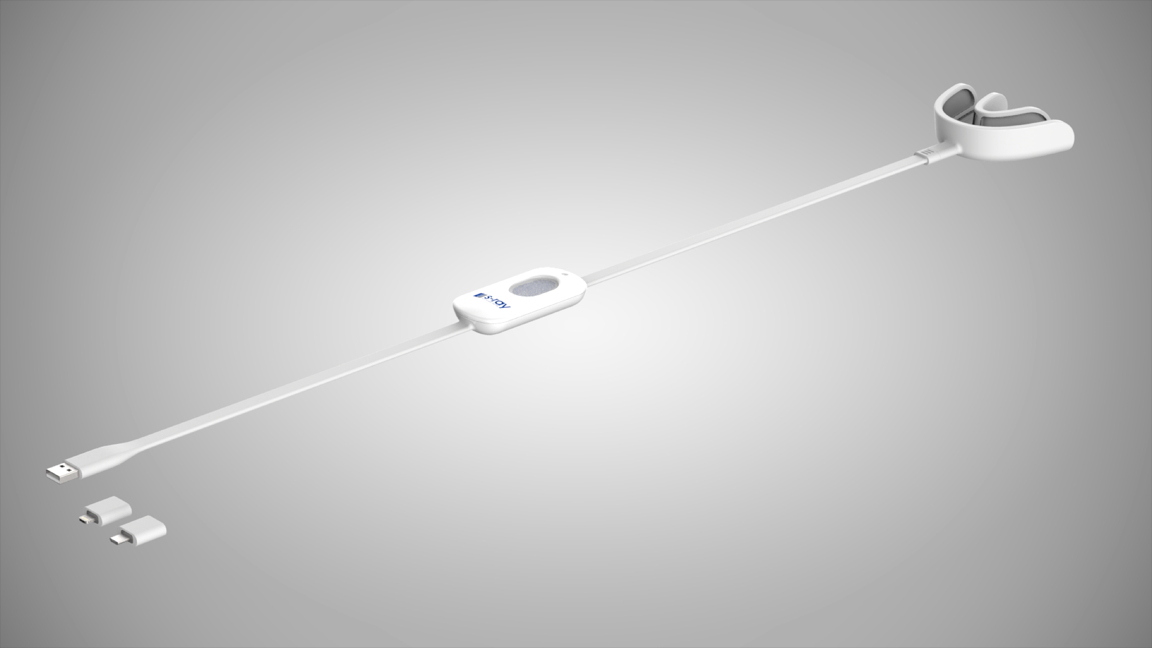
Let me back up a bit and say that as a market driven company, we believe that the market will determine the need for new products. We also believe there should be a process in all that we do. I have seen too many times where a company will design a product based on the components available on the bench at the time. As they test components in the lab to prove their concept, they then take those parts and build
a shell around them. It has led to some bleak and ugly products over the years that are neither ergonomic nor aesthetic.

At S-Ray, we are not only market driven, we also believe in a design based approach to creating new and innovative products. Having our research lab based in Seattle gives us a distinct advantage over other companies. Not only is our lab right in the middle of one of the top locations in the world for ultrasound research and development, we are also surrounded by highly capable technical designers and programmers. In fact, the same company that helped design Microsoft’s X-Box Call of Duty controller was instrumental in bringing our designs from concept to digital design and then to tangible prototypes. It is the most recent design of the intraoral mouthpiece which we are calling ClearView SCAN that we believe will provide dramatic improvements in the profession by offering multiple functions in one easy to use device.

MD:  It seems like the hardware – ClearView SCAN and ClearView LAB – is just the tip of the iceberg. Is it fair to say that S-Ray is really working on a platform approach?

SP:  Yes, that is correct. We realized early on that a platform approach would prove beneficial to S-Ray as a company as well as the dentists and labs who use our products and services. By allowing for multiple functions in one device, it makes it much more efficient and scalable. Instead of having to buy a new device for each function, you can add multiple functions to the same device.

Just to confirm the point, when a patient comes in for an exam, x-rays and periodontal probing occur independent of each other and each taking a fair amount of time to perform. If there are any concerns about cracks, the doctor may use a bite stick to try to localize where the crack is. This is often a difficult diagnosis and inaccurate at best. Now, imagine if all of those functions could be performed by just one device in a short amount of time and render the results in a 3D image immediately. That is a platform approach – multiple functions and services that make the workflow much more efficient and cost-effective. And, it’s all digital and archivable for future comparisons.

As you mentioned, these are just the tip of the iceberg and there are many more planned which we will reveal when the timing is right.

MD:  Let’s look into the crystal ball. What trends do you think will have the biggest impact on the dental industry in the next few years?

SP:  There are many things that are rapidly evolving in the industry right now. Dental Service Organizations are definitely here to stay. Sleep apnea and airway management are a rapidly growing segment. But, without a doubt, the transition to digital will continue to have the largest impact on the dental industry. It affects every segment of the dental industry. Whether in the lab with 3D scanning, milling, and printing of prosthetics, or in the dental office scanning everything from airway, to implants, to digital images and charts.

Pretending that it is not here to stay would be like using a slow speed handpiece for every procedure. Sure it works, but there are much more efficient options available today. Digital dentistry makes each business more efficient, more predictable, and less stressful.

MD:  Lastly, the question on everyone’s mind. When will dentists and labs be able to purchase the first S-Ray product(s)?

SP:  Stay tuned and check in often on our website. We are getting closer every day to making this a reality.

Thanks again, Dr. Parker, for taking some time to update us on the progress at S-Ray. I look forward to what’s to come. If you have questions of your own for Dr. Parker and S-Ray, please reach out to them.

I look forward to sharing future updates from Dr. Parker and S-Ray via articles on this site or an upcoming podcast.  Thank you for reading.

Posted in Business of Dentistry, Dental Technology, Digital Dentistry, News, Products | Tagged , , , , , | 1 Comment

Compliance Corner: HIPAA Compliance in a Dental Office – It’s Not That Bad!

Compliance Corner Image 1In cooperation with my friends at Aspida, we’re launching a new column to the site, the Compliance Corner.  Each quarter, we’ll feature a new article about HIPAA compliance, regulatory news, keeping patient data private & secure, and other topics to help keep dental practices and their patients safe.  Here’s the first article from Laura Miller, Compliance Manager at Aspida.  It’s a primer on the basic tenets of HIPAA and why compliance is important for dental practices and their team members.  Enjoy!

HIPAA. This simple five letter acronym has the power to elicit almost the exact same reaction from any healthcare provider… UGHHH! Hospitals, dental offices, and any other health care providers that manage private health information today must adhere to strict policies for ensuring their data is secure at all times.

HIPAA is not new – it’s been around since 1996! Contrary to what you commonly see, it’s NOT spelled with two P’s (HIPPA). And it’s actually not all bad.

Still with me?

The Health Insurance Portability and Accountability Act (HIPAA) was created to protect your patients and their Protected Health Information (PHI) by way of applying processes into a service related practice.

Bottom Line:  Healthcare providers need to apply certain procedures, or safeguards, within the practice to ensure their patients’ data are not vulnerable to snooping eyes (and hands!). HIPAA defines these safeguards by three separate categories: Administrative, Physical & Technical.

Below you will find HIPAA’s definition of these safeguards and our interpretation.

• Administrative procedures are defined as, “administrative actions, and policies and procedures to manage the selection, development, implementation, and maintenance of security measures to protect electronic protected health information and to manage the conduct of the covered entity’s workforce in relation to the protection of that information.”
Aspida Breakdown: People & Process. Examples: What can you say and Who can you say it to? This covers your Notice of Privacy Practices – are they up to date? Is your staff trained on HIPAA? Is it documented?

• Physical Safeguards are the “physical measures, policies, and procedures to protect a covered entity’s electronic information systems and related buildings and equipment, from natural and environmental hazards, and unauthorized intrusion.”
Aspida Breakdown:  What is going to stop someone from physically stealing your patient data. Examples: Are there locks on your perimeter doors? Is your server located in a locked closet? Is your server housed off premise (hosted in the cloud)?

• Technical security mechanisms and services are the “technology and the policy andAspida Ad Oct2015 procedures for its use that protect electronic protected health information and control access to it.”
Aspida Breakdown:  This is your (computer) network infrastructure. Examples: Do employees have unique logins to access your network? If you employ remote access, have you verified a secure connection? If you have WiFi, is it password protected? Do you email ePHI securely (encrypted)?

By familiarizing yourself and your team about HIPAA, you’ve taken the first steps to protection. The next step would be to figure out what procedures work best for your practice and come up with a plan for implementation. Luckily, there are companies that specialize in assisting dental offices with implementing such protocols. And don’t forget, documentation of all policies and procedures is key!

About the Author:
Laura Miller is Compliance Manager of Aspida, which has quickly established itself as an industry leader in providing compliance security products and services for healthcare providers.  Their first product to market, Aspida Mail, offers medical practices affordable Encrypted Email without compromising security.
Miller has over 8 years of experience in the healthcare industry including 3 years with a primary focus on HIPAA Compliance procedures.

Thank you for reading!  And as a special Thank You, Aspida is offering readers of this site an exclusive discount on your first three months of Aspida Mail – get the first three months for $3 with Promo Code “DUNN”.  Click the button to the right to take advantage of this offer.

Posted in Dental Technology, Digital Dentistry, Getting Started, Guest Contributors, Products | Tagged , , , , , , | Leave a comment

5 Questions With Whole You

WholeYou_logoSleep is a growing field within medicine and dentistry, representing a key opportunity for practitioners to work together for patients’ total wellness.  I have believed for a few years now that dental sleep medicine may be the “next big thing” for dentistry and the early adopter segment of the dentist population.  I am happy to share insights on sleep, dentistry, and holistic wellness from Hiromi Inagaki, Chief Innovation Officer of Whole You, Inc., in this installment of 5 Questions With…

Michael Dunn: Tell us about Whole You. What products and services do you offer?

Hiromi Inagaki: Whole You is a new healthcare company offering innovative solutions that help those with sensory and physical mobility challenges experience their best life.

We have a human-centric approach, which is understood in two ways.  First, the needs and aspirations of our patients as human inform the design and manufacture of all our products – we start with the patient and go from there.  Second, we take an interdisciplinary approach and collaborate with subject matter experts in developing solutions that enable people to live life more fully.

Our first focus has been on oral appliances for sleep apnea and we plan to expand into other areas that address sensory and physical mobility.  In the oral space, through the acquisitions of Respire Medical and DENTCA, we are combining our deep consumer understanding and the material science expertise of Whole You, with our partners’ industry knowledge as well as collaborating with subject matter experts from across the world to develop the next generation of products and services.

MD:  How did Whole You begin?  What was the “a-ha” moment?

HI:  We spent a long time observing, listening and talking with consumers and realized that what people really want are solutions that can help them experience more and live a better life now. While we agree that it’s critically important to treat illnesses and disease, we also feel it’s important to help those with sensory and physical mobility challenges enjoy life to the fullest.  For example, research has shown that improving one aspect of a patient’s life, such as the amount of quality sleep they get, can exponentially improve their quality of life.

MD:  What makes Whole You’s products unique compared to similar products?

HI:  As I mentioned at Whole You we have a human-centric approach in the design and manufacture of our products. We understand that every patient is different and to increase patient compliance with Sleep Appliances they need to be customized and adjustable. Whole You acquired Respire Medical, a lab that exclusively creates bespoke oral appliance solutions that can be customized to a patient’s specific requirements; we currently offer two Sleep Appliances, Respire Blue and Respire Pink.

respire blueRespire Blue is an easy and comfortable to wear appliance that features a dual block design with interlocking wings, and is personalized for each patient and provides more freedom in mouth movement, allowing you to talk, drink and yawn while you are wearing the device.

respire pinkRespire Pink features an ergonomic design with telescopic hardware which is also personalized for each patient. The telescopic hardware allows lateral and vertical jaw movement, making it a suitable sleep apnea treatment for patients who also grind their teeth at night, plus it’s Medicare approved.

Further customization of these products is possible with the option to add elastic hooks and an anterior disclosing ramp as well as a choice for reduced lingual coverage.

MD:  What trends do you think will have the biggest impact on the dental industry in the next 5 – 10 years?

HI:  We will start to see a few things, such as:

  1. Sleep dentistry will become far more of an established field as dentists recognize the many benefits of treating patients suffering from Obstructive Sleep Apnea (OSA) and offer treatment with Sleep Appliances. As more and more people afflicted with the condition will be diagnosed, we’ll see patients take an ever more active role in researching and selecting their treatment options in partnership with their healthcare provider. Hence designing products and services that truly reflect patients’ voice and lifestyle aspirations is critical.
  2. There’ll be a more holistic look at dentistry. It’s becoming clearer that dental health has an impact on the whole body so we will see additional research and understanding in this area. For example, how oral health impacts cardiovascular disease as well as how the state of a patient’s oral health may indicate conditions such as acid reflux and diabetes.
  3. There will be better technology that leads to better results – technology will continue to evolve and play a role in better, more cost-effective oral health. For example, more advanced materials, better CAD/CAM technology and 3D printing will continue to improve oral health and the patient experience.

MD:  What’s next for you and Whole You? What can we look forward to?

HI:  You can expect to hear more about product and partnership news from Whole You. We look forward to keeping you updated.

Thank you to Hiromi and Whole You, Inc. for participating in this article.  For more information on Whole You, please get in touch through their website.  Thank you for reading.

Posted in 5 Questions With..., Dental, Dental Technology, Digital Dentistry, Products | Tagged , , , , , , , | Leave a comment