
5 Questions With Anutra Medical

anutra-medical-logoIf you have visited this site before, you probably realize I love North Carolina.  And, I really enjoy it when I have the opportunity to feature a North Carolina company in my 5 Questions With… series.  This month I am very pleased to be joined by a new dental products manufacturer from Research Triangle Park, NC, Anutra Medical.  Cameron Perkins, President of Anutra Medical, was kind enough to share his thoughts on dentistry, his company, and their mission to make dental procedures more comfortable for patients and more predictable for practitioners.  I hope you enjoy meeting Cameron and Anutra as much as I did.

Michael Dunn:  Tell us about Anutra Medical. What product(s) do you offer?

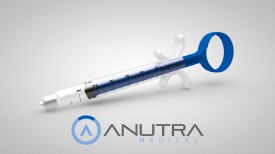
Cameron Perkins:  With a passion for buffering local anesthetics, Dr. Daniel Davidian, DDS, set out to create a product with an equal focus on enhancing a patient’s experience and increasing office efficiency. The idea of buffering has been around in medicine for decades. His passion for buffering was spurred on by his father who was a respected anesthesiologist. In the late 1990s, Dr. Davidian began his quest to simplify buffering so all healthcare providers could integrate the practice into their daily patient care. In 2013, he founded Anutra Medical. In February 2014, Anutra launched it’s Anutra Local Anesthetic Delivery System. The system consists of the Anutra Dispenser®, Anutra Cassette®, and Anutra Feedback Aspiration Syringe®. This system transforms the way local anesthetic has been delivered.
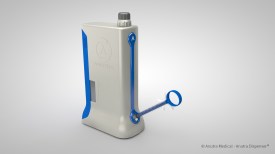
Anutra Dispenser
Anutra Dispenser

Anutra Feedback Aspiration Syringe

Anutra Feedback Aspiration Syringe

MD:  How did you become involved with Anutra?  What was your “a-ha” moment?

CP:  As Dr. Davidian says, “I believe that buffering local anesthetics is a best practice for all dentists. It not only provides a more comfortable experience for the patient, it also creates a more predictable and reliable anesthetic effect, resulting in improved efficiency for the practitioner.”

For me, when I was asked to be President of Anutra Medical, it was a no-brainer. Having a medical background, I saw the immense benefit for practitioners as well as the patient. It is rare that you see such a revolutionary product that equally benefits both the clinician and the patient.

MD:  What makes Anutra’s product line unique compared to similar products?

CP:  Having used various buffering methods for quite some time, Dr. Davidian seized the opportunity to create a revolutionary product that simplified buffering and local anesthetic delivery for all practitioners. As we worked through the R&D process, we sought to create a product that overcame some obstacles Dr. Davidian had faced while buffering in his own practice. Some of the greatest advancements I’m most excited about include precisely buffering anesthetic with the twist of a knob, making buffering cost-effective for everyone, an increased 4 day shelf-life on the product, and, most impressive, a multi-dose feedback aspiration syringe.

MD:  What trends do you think will have the biggest impact on the dental industry in the next 5 – 10 years?

CP:  I truly believe that buffering local anesthetics will continue to be a hot topic in the dental industry in the coming years. Even being at CDA Anaheim in May, I saw the great deal of buzz surrounding buffering, beyond our product. It will be great to see dentists really embrace buffering.  Buffering truly could revolutionize the industry both for patients and practices.

MD:  What’s next for you and Anutra?  What can we look forward to?

CP:  At Anutra, we believe that a patient’s experience and a practitioner’s efficiency are closely linked. It is our goal, both with our current product offerings and with any future offerings, to bring to the market products that meet both of those criteria. So far, we have accomplished this with providing the Anutra Local Anesthetic Delivery System® to simplify buffering. The Anutra Feedback Aspiration Syringe® is also a major advancement allowing bulk delivery of local anesthetic for practitioners as well as providing a less intimidating syringe for patients. We will continue to innovate and create solutions that revolutionize the dental industry as we focus on helping practitioners provide better patient care.

A big Thank You to Cameron Perkins and the team at Anutra Medical for participating in 5 Questions With…  If you have questions of your own or would like more information on the product or company, please contact them directly.  And thank you for reading.

Posted in 5 Questions With..., Dental Technology, Products | Tagged , , , , , , | 2 Comments

5 Questions With ResMed

ResMed LogoWe all know that sleep is crucial to our everyday functioning.  More than that, sleep is restorative and critical to general health and well-being.  I have seen first hand the detrimental effects that poor sleep and lack of sleep can have on one’s health.  This month, Annie McBride, ResMed’s Sr. Product Manager, Dental Sleep Business, took some time to answer 5 Questions and share some insights on how the company is helping health care providers to enable patients to get a better night’s sleep.

Michael Dunn:  Tell us about ResMed. What products and services do you offer?

Annie McBride:  ResMed develops new and innovative treatments for sleep-disordered breathing, chronic obstructive pulmonary disease (COPD) and other respiratory conditions. The company was founded more than 25 years ago to commercialize the first CPAP (Continuous Positive Airway Pressure) therapy for sleep apnea, and has since grown to more than 4,000 global employees with operations in more than 100 countries around the world. ResMed’s products include devices, masks, humidifiers, accessories and dental appliances to treat sleep apnea and related respiratory conditions; healthcare informatics solutions for both providers and patients, including diagnostics, monitoring and data management technologies; and S+, the world’s first non-contact sleep tracker for general consumers.

MD:  What type of dental devices does ResMed produce?

AM:  There are several types of oral appliance therapies available to treat sleep apnea, and one of the most popular is the mandibular repositioning device (MRD), which holds the lower jaw in a forward position during sleep to keep the airway open. In this category, ResMed offers Narval CC, a customized device with an innovative design that uses advanced computer-aided design (CAD) and manufacturing (CAM) technology.

Because we believe compliance is directly related to comfort, the device was engineered to offer patients greater comfort than ever before. We decreased bulk by using lighter materials, expanded tongue space and enabled freedom of ventricular mandibular movement, so patients can still speak and drink while in function. And we’ve had overwhelmingly positive responses with the product so far. In a recent clinical study, patients wore their Narval CC 6.7 hours/night 6.6 nights/week [1].

MD:  What makes ResMed unique compared to similar companies?

AM:  One of ResMed’s key differentiators is its strong emphasis on research and development, with around 8% of total revenue spent on R&D. We believe this has contributed to our status as the global leader in development of medical products for the diagnosis, treatment and management of sleep and respiratory disorders, and one of the reasons why we continue to innovate and produce high-quality treatment options for patients in need.

One of our R&D initiatives in dental includes ORCADES, a five-year multicenter study on MRDs, and the results confirm positive findings from previous studies. Findings from ORCADES include an 84% success rate, irrespective of obstructive sleep apnea severity; a reduction of apnea-hypopnea index (AHI) to fewer than 10 in 63% of patients; significant reduction of the oxygen desaturation index, from 21 to 8; loud snoring completely resolved in 90% of patients affected; and quality of life, fatigue score and sleep quality significantly improved [2]. Studies like these help ensure all of our offerings are successful in improving the health and lives of our patients, and we believe this strong commitment is one that separates us from our competitors.

MD:  What trends do you think will have the biggest impact on the dental industry in the next 5-10 years?

AM:  One area we’re seeing gain traction is intraoral digital scanning. It’s a practice that has been in existence for many years, but has only recently begun permeating sleep. Many see this technology as a way to help boost efficiencies and create more accurate sleep appliances more quickly. With this in mind, we’re looking into enabling this type of technology and are excited for what its application could mean for our customers.

MD:  What is the best way for dentists to add sleep support to their practices?

AM:  We work with 14 dental laboratories in the US and Canada to serve dentists interested in supporting sleep at his/her practice. Obstructive sleep apnea is a medical condition, but MRD treatment requires dental expertise to ensure proper patient selection and selection of oral appliance therapy, making dentists a truly important part of the multidisciplinary teams working to treat sleep apnea. With Narval CC for example, dentists send impressions or plaster models of their patients to our lab partners who then provide us with the scans and models that we use to design and manufacture the devices. Dentists interested in adding sleep to his/her practice can check out ResMed’s Dental Practitioner Guide for background, or the Narval CC order form to get started. ResMed also hosts a quarterly webinar with active treating clinicians to showcase the variety of cases Narval can address.

References:

1. JC Meurice et al. Orcades. A prospective cohort study of severe obstructive sleep apnea patients receiving second line-treatment with a mandibular repositioning device (CAD/CAM; Narval)
2. http://www.resmed.com/us/en/healthcare-professional/support/dental/achieving-results.html

Thank you, Annie and ResMed, for participating in 5 Questions With…  If you would like to learn more about ResMed, visit ResMed.com.  And as always, thank you for reading.

Posted in 5 Questions With..., Dental Technology, Products | Tagged , , | Leave a comment

Solea Comes of Age

Dr Weintraub and his Solea
For the last couple of years, Convergent Dental’s Solea has been one of the most talked about technologies and brands in the dental industry. And what’s not to talk about? The capability to cut hard and soft tissue combines with little sound and virtually no discomfort for the patient. Win, win, win in my book. During this time, it has also been updating and innovating its technology at near break neck speed. So, nearly two years since launch, has Solea come of age? I talked with Dr. Joshua Weintraub, a dentist in Owings Mills, MD who recently incorporated the laser from Convergent Dental into his practice, to find out.


On the Late Side of Early

Many are familiar with the theory of discontinuous technology adoption, the “technology enthusiast” – “early adopter” – “early majority” – “late majority” – curve associated with it, and the deadly chasm proposed by author Geoffrey Moore which lies precariously between the early adopters and the early majority. Prior to speaking with Dr. Weintraub, I expected he would be one of the innovators or early adopters I’ve spent much of my career around. After all, here’s a relatively new (by dental industry standards) laser technology with bold claims about being able to cut both hard and soft tissue without the use of anesthesia. Having jumped on board, he must be a tech enthusiast, right?

I was wrong. Dr. Weintraub owns a “mostly restorative” general dentistry practice just outside of Baltimore, MD with one full-time and two part-time associates (including a pedodontist), and was quick to describe himself as not “incredibly” early in terms of technology adoption. He has previously used an erbium laser, the STA system for anesthetic injection, and a Vita Easy Shade, but there’s no digital impression or CAD/CAM in his office. Those may come in the future, he says. In terms of technology, he places himself on the “late side of early”.

Promise and Deliver
Just as his practice aims to provide “high quality and the best service,” Dr. Weintraub looks for his technology investments to provide the same. He felt his previous erbium laser just “over promised and under delivered.”  He explained to me that the prior laser did not allow for anesthetic-free dentistry. Too many patients had sensitivity and it cut too slowly to allow it to be used routinely for hard tissue procedures. He ended up using it mainly for soft tissue. A Convergent Dental representative found Dr. Weintraub and asked if he could show him Solea. Dr. Weintraub was open to talk, but “not willing to buy unless I was incredibly impressed.”

He discovered the Solea ablates enamel faster, quieter, and cleaner. He made the purchase and after a couple of weeks found that Solea did even more than he expected once he got it into his practice.

Benefit the Practice and Amaze Patients
One of his most important deciding factors in making the purchase was that he “saw it could benefit the practice and amaze patients.” Almost six months in, Dr. Weintraub estimates that 95% of his procedures are performed without anesthetic. “Solea buys you time. Nothing slows down your day like waiting for a patient to get numb on a second lower molar.” Additional procedures performed within the time saved typically waiting for anesthetic to take effect pay for the monthly payment. According to Dr. Weintraub, “I do one to three extra procedures per day because I can do more on each patient without waiting [for them] to get numb. I’m able to fit in smaller cases without waiting for anesthetic.”

He says patients are “wowed” by Solea. “They were never ‘wowed’ by the erbium [laser].”  One patient he fondly recalls was “so anxious she wanted extra topical.” “I was able to do the procedure without anesthetic and she was amazed.” Dr. Weintraub also commented on a pediatric case. “On a 9-year old, I was able to perform a crown lengthening and gingivectomy with only topical.” As the first Solea user in the state of Maryland, Dr. Weintraub has already been featured on a local news segment. And he’s definitely seeing more new patients due to word of mouth about this unique experience.

So, has Convergent Dental’s Solea come of age? As demonstrated by the new updates released at the recent California Dental Association meeting, the innovation continues to flow for this young company and technology. Whether it has come of age may be debatable, but it certainly is proving to be getting better with age. And I’m looking forward to seeing the next stages of its maturity.

Thank you for reading. For more information on Dr. Joshua Weintraub’s practice, please visit stevensonsmiles.com. For more information on Solea, contact Convergent Dental.

Posted in Dental Technology, Products | Tagged , , , | 1 Comment